

Does Immunotherapy Really Have No Side Effects?
 Dr. Sudha Sinha·Medical Oncologist & Hematologist·8 min read
- ✓Immunotherapy is not side-effect free — it just causes a different kind of side effect than chemotherapy.
- ✓Side effects can happen during treatment, or months later, once treatment has finished.
- ✓They can affect almost any organ, not just the one being treated for cancer.
- ✓Any new symptom is worth reporting — reporting early is never overreacting.
- ✓Some symptoms need immediate emergency care, not a wait-and-see approach.
"Fewer Side Effects" Doesn't Mean "No Side Effects"
Immunotherapy is often described as having fewer side effects than chemotherapy. That's true — but it doesn't mean it is side-effect free.
Hair loss, severe nausea, and dangerously low blood counts are much less common than with chemotherapy. Instead, immunotherapy can cause your immune system to attack healthy organs such as the skin, lungs, liver, bowel, or hormone glands.
Most side effects are mild and manageable. A few can become serious if they're ignored. This article will help you recognise the difference.
Why Immunotherapy Side Effects Are Different
Immunotherapy activates your immune system to attack cancer. Sometimes, that activated immune system can also attack healthy organs. This is why immunotherapy side effects are different from chemotherapy, and why they can turn up almost anywhere in the body.
- ✓Can affect almost any organ — skin, gut, lungs, liver, kidneys, hormone glands, heart, brain, or nerves — because the immune system can reach anywhere in the body.
- ✓No predictable timing — unlike chemotherapy's nadir days, there's no calendar you can mark as "safe" or "risky."
- ✓Can happen even months after treatment ends — because the immune system stays switched on well after your last infusion.
Symptoms You Should Never Ignore
This section covers the warning signs that should never be ignored, organised by which part of the body they affect.
🧠 Brain & Nerves
Headache, confusion, weakness, numbness or tingling
🫁 Lungs
New cough, shortness of breath, chest tightness
❤️ Heart
Chest pain, palpitations, fainting
🟡 Liver
Yellow eyes, dark urine, upper abdominal pain
🥞 Pancreas
Upper abdominal pain, nausea or vomiting not explained by other causes
🚽 Bowel
Diarrhoea, blood in stool, abdominal pain, nausea or vomiting
💧 Kidneys
Decreased urine, swelling, blood in urine
🧴 Skin
Rash, itching, blistering or peeling skin
⚖️ Hormone Glands (thyroid, adrenal, and others)
Unusual fatigue, weight changes, dizziness, feeling unusually hot or cold, mood changes
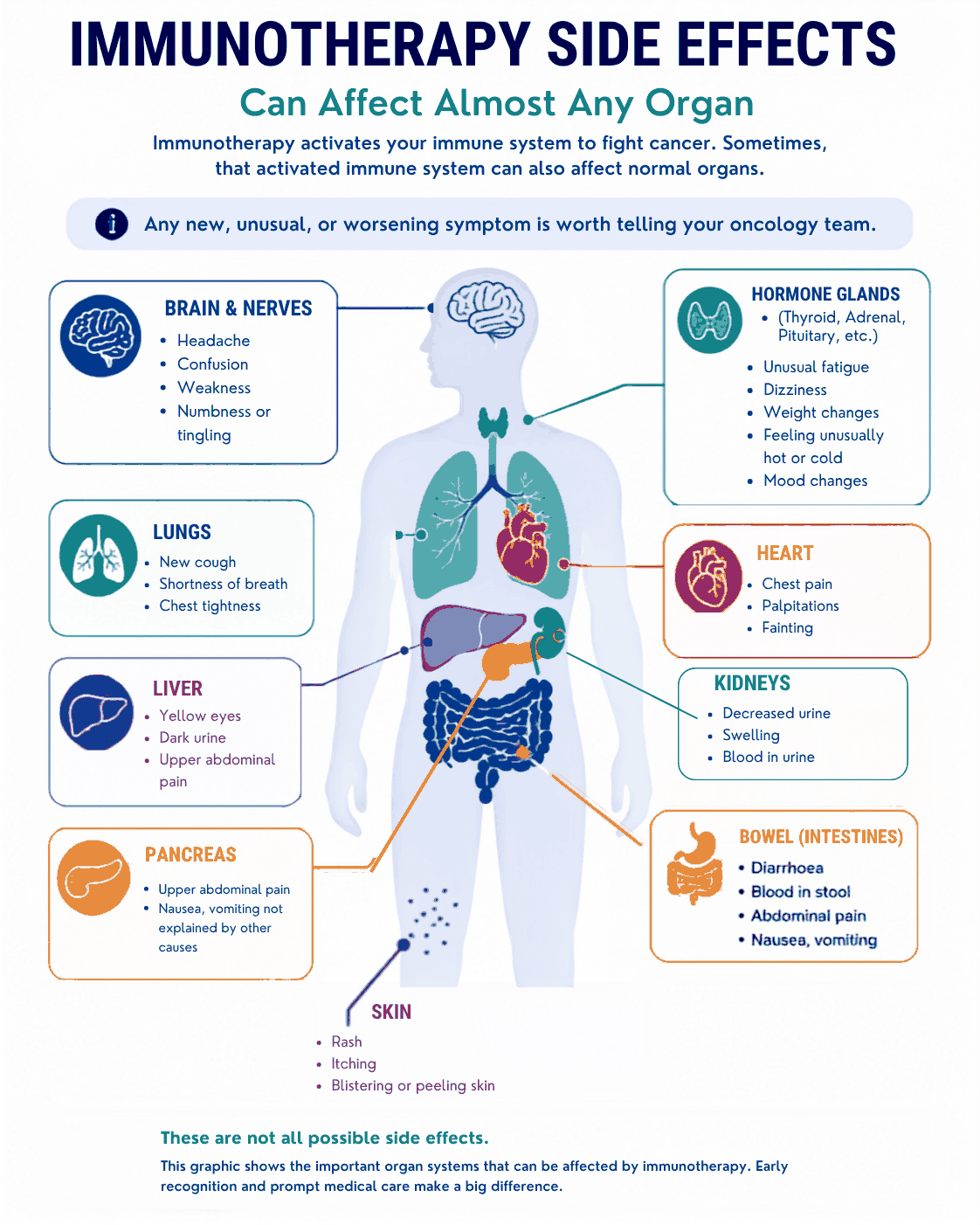
Not every symptom above needs the same urgency. Here's how to tell the difference:
Early treatment prevents serious complications. This list isn't every possible side effect — it's the ones where waiting even a day or two can let something manageable become something much harder to treat. Always tell every doctor you see that you are receiving immunotherapy.
What Happens If This Is Caught Early?
Most immune-related side effects respond well when recognised early.
- ✓Immunotherapy may be paused temporarily.
- ✓Steroids are often used to calm the immune system.
- ✓Other specialists may become involved, depending on which organ is affected.
Early treatment prevents serious complications and leads to better outcomes.
What Should You Tell Every Doctor?
"I am receiving immunotherapy for cancer."
If you know the name of the drug, mention that too. Many immunotherapy side effects look like common medical problems, but they're treated differently. Simply telling the doctor you're on immunotherapy can change the tests they order and the treatment they recommend.
Chemotherapy lowers your immunity. Immunotherapy can make your immune system attack healthy organs. Both are treatable — but only if you seek help early.
Frequently Asked Questions
Related Reads
Questions about your treatment plan?
Our patient coordinator is available on WhatsApp.
WhatsApp 7207815222