

How to Plan Your Chemo Diet: A Simple Day-to-Day Approach
 Dr. Sudha Sinha·Medical Oncologist & Hematologist·8 min read
- ✓Eat small amounts often
- ✓Include protein without stressing over exact amounts
- ✓Lean on comfort food on hard days
- ✓Avoid becoming overly concerned about sugar
- ✓Stay hygienic with food throughout treatment, not just on low-count days
Why a plan helps
Chemotherapy doesn't feel the same every day. Treatment day feels different from day 4. Day 4 feels different from day 10.
Some days you'll feel like eating normally. On others, even a few mouthfuls can feel like an achievement. Trying to eat the same way every day often leads to frustration.
A simple, flexible plan helps you adapt to these changing days, so you spend less time worrying about food and more time focusing on your recovery.
The rhythm of a chemo cycle
Most chemotherapy is given in cycles, with a rough pattern of good days and hard days repeating each time.
Some days, all you'll manage is curd rice or toast. That's okay — one difficult day won't ruin your nutrition.
Most patients find their pattern becomes fairly predictable after the first cycle — cycle 1 teaches you how cycle 2 will probably feel. Pay attention to how you feel through cycle 1, and you'll likely be able to plan the next one around it with confidence.
Planning principles that actually work
You don't have to eat perfectly every day. Your goal is a pattern you can maintain over the course of treatment — not a perfect meal plan every day.
- ✓Maintain your weight — this is the goal, not weight loss, even if that was a goal before your diagnosis
- ✓Drink fluids — 8–10 glasses a day
- ✓Include protein at each meal, without stressing over exact amounts
- ✓Keep food safe and hygienic throughout treatment — not just on low blood-count days
- ✓Monitor your sugars as per your oncologist's recommendation
- ✓Any new supplement or powders
- ✓Fasting or deliberately skipping meals to "detox"
Homemade food with normal spice levels is usually fine. Food doesn't have to be bland or spice-free — if you can tolerate it and have the appetite for it, enjoy it.
- ✓Check with your doctor whether raw fruits and salads are safe for you right now — this can depend on your current blood counts
- ✓Deep fried food or very oily food if they worsen nausea or indigestion
- ✓Restaurant food if hygiene is uncertain
- ✓Wash hands before cooking and before eating
- ✓Wash fruits and vegetables thoroughly
- ✓Cook meat, fish, and eggs fully — avoid runny yolks or pink/undercooked meat
- ✓Use separate boards and knives for raw meat and for vegetables
- ✓Prefer freshly cooked food over reheated leftovers, especially when your counts are low
A simple daily rhythm
There isn't one perfect chemotherapy meal plan. If most of your meals follow this general pattern, you're doing well.
🌅 Breakfast
Choose one staple **+** one protein. Idli, dosa, upma, poha or oats · Add a boiled egg, curd, moong dal chilla, or a protein-rich chutney made with peanuts or sesame
🍎 Mid-morning
A small protein-rich snack. Boiled egg · Roasted chana · A handful of nuts · Curd
🍛 Lunch
Build your plate around: Rice or roti · Dal or another protein · Vegetable · Curd
☕ Evening
Eat or drink whatever feels easiest. Buttermilk · Soup · Milkshake · Fruit · Nuts · Fresh juice (if appropriate)
🌙 Dinner
Similar to lunch, or lighter if your appetite is poor. Simple home-cooked tiffins are perfectly acceptable.
🥛 Before bed (optional)
Milk or another protein-rich bedtime snack, if you're hungry.
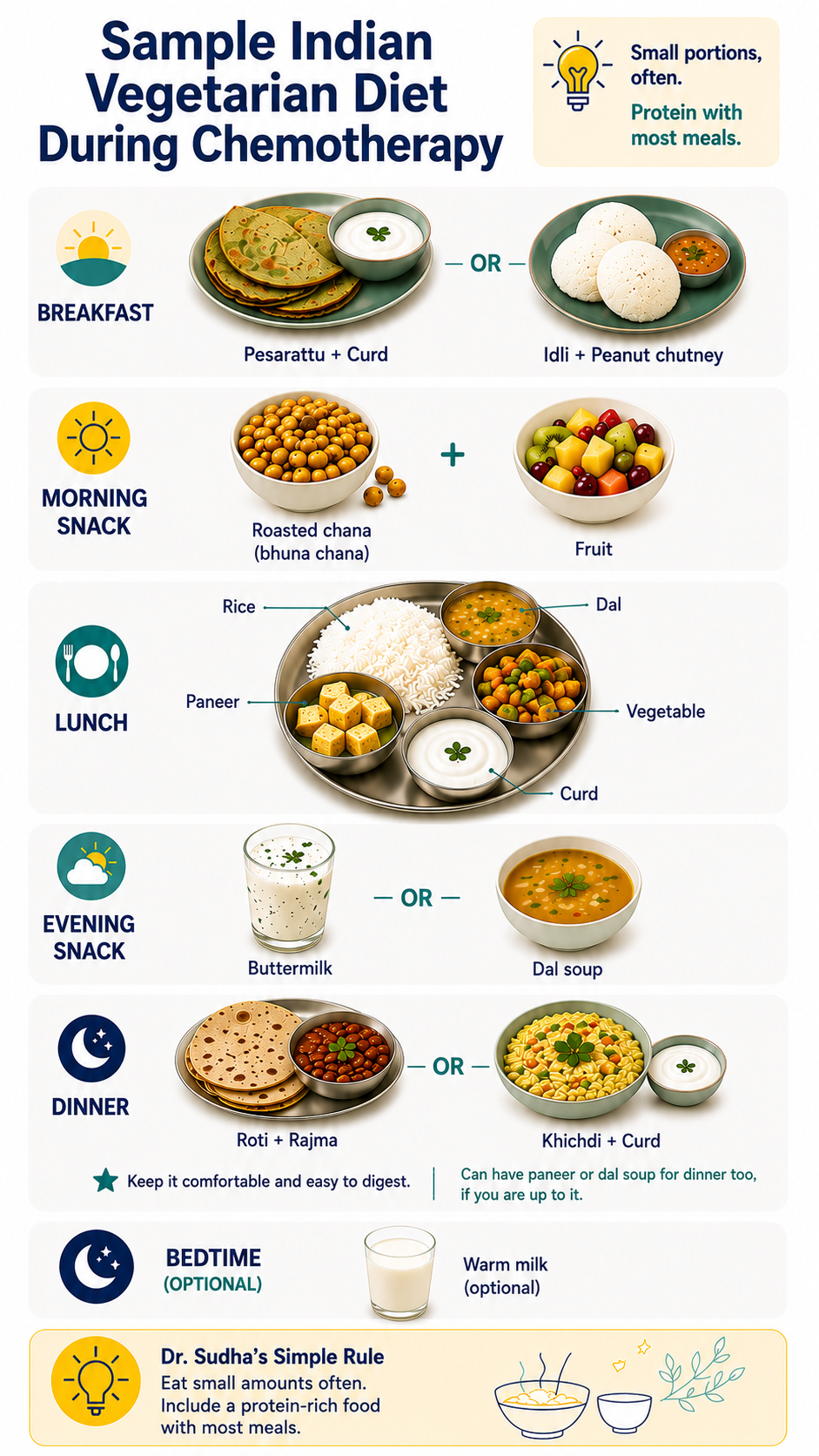
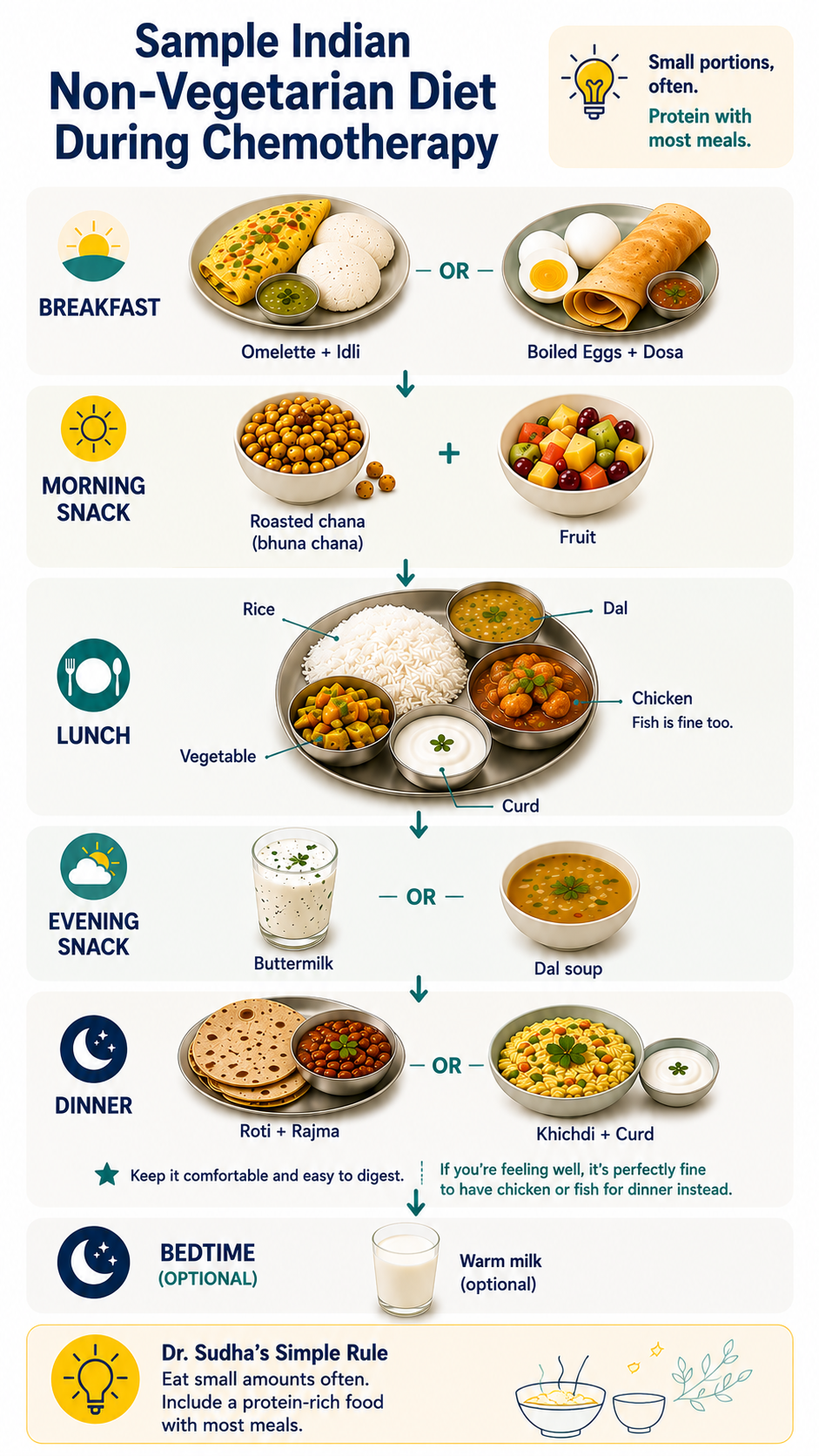
See it laid out — a sample day
One way this rhythm can look in practice. Not a fixed menu — just an example to picture it against.
- ✓Your weight is stable
- ✓You're drinking enough fluids
- ✓You're eating some protein most days
Frequently Asked Questions
Related Reads
Questions about your treatment plan?
Our patient coordinator is available on WhatsApp.
WhatsApp 7207815222